





About Látrabjarg
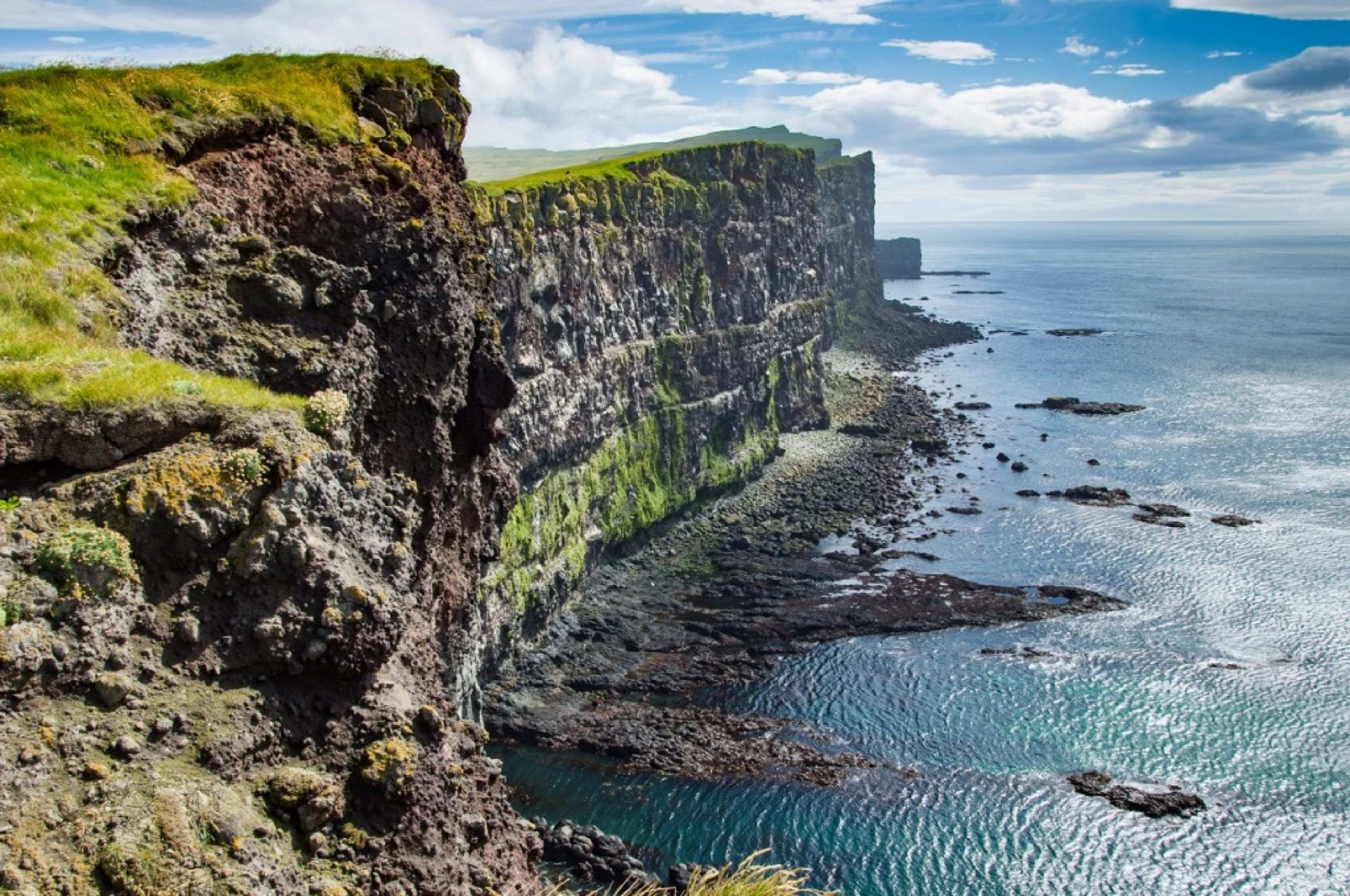
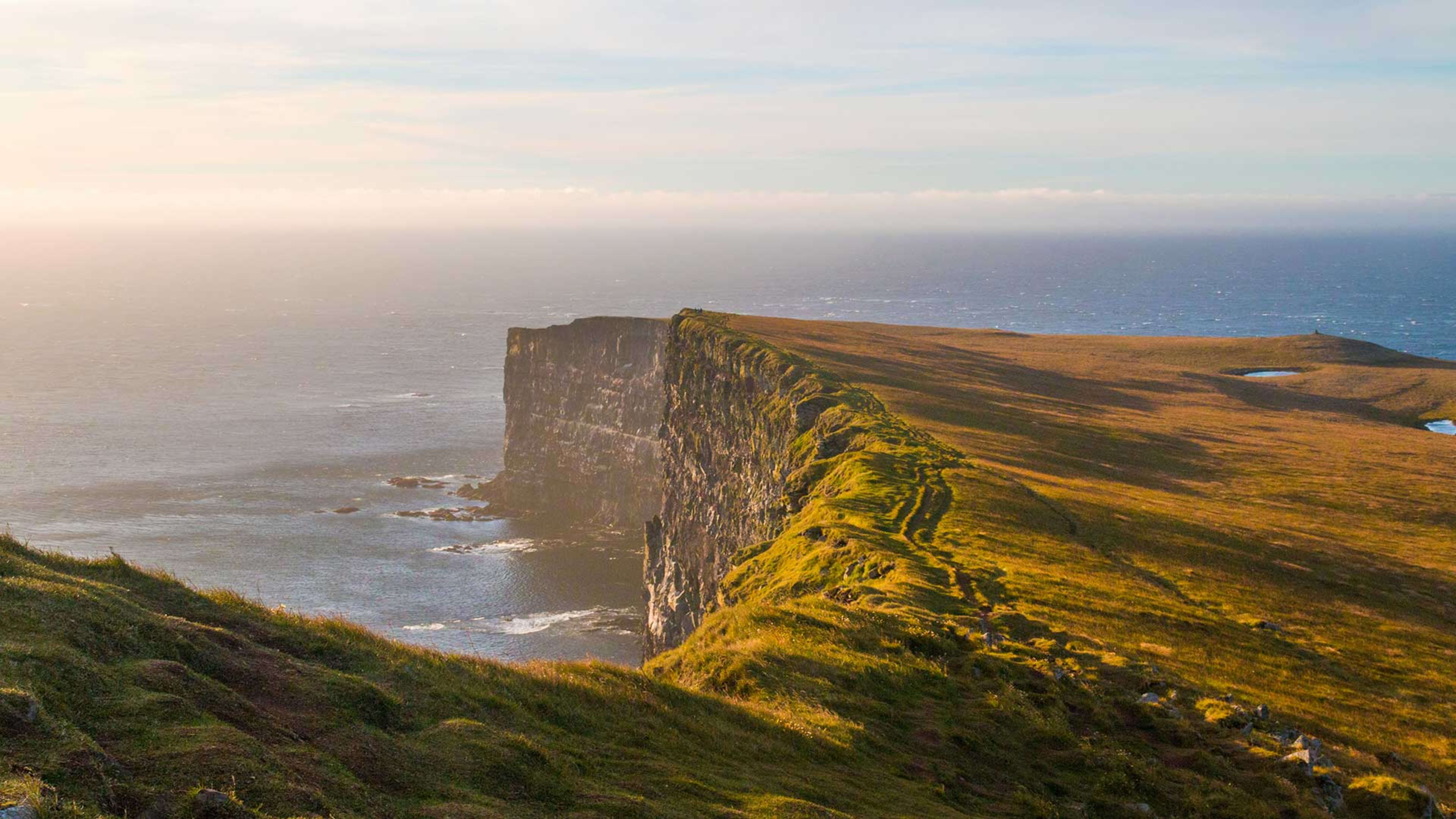
Látrabjarg marks the westernmost tip of Iceland and, excluding the Azores, one of the westernmost points of Europe. The cliffs are made up of four distinct sections running from east to west: Keflavíkurbjarg, Látrabjarg, Bæjarbjarg, and Breiðavíkurbjarg. At their highest point they drop 440 metres to the Atlantic below, and the clifftop trail follows the edge for several kilometres with unobstructed views across the ocean.
The lighthouse at Bjargtangar, at the far western end, is the westernmost lighthouse in Europe. A small parking area sits near the lighthouse, and a white line painted along the cliff edge marks the boundary visitors are asked to stay behind. The ground near the edge is loose in places, particularly where puffins have burrowed into the clifftop turf, and caution is essential.
Birdlife
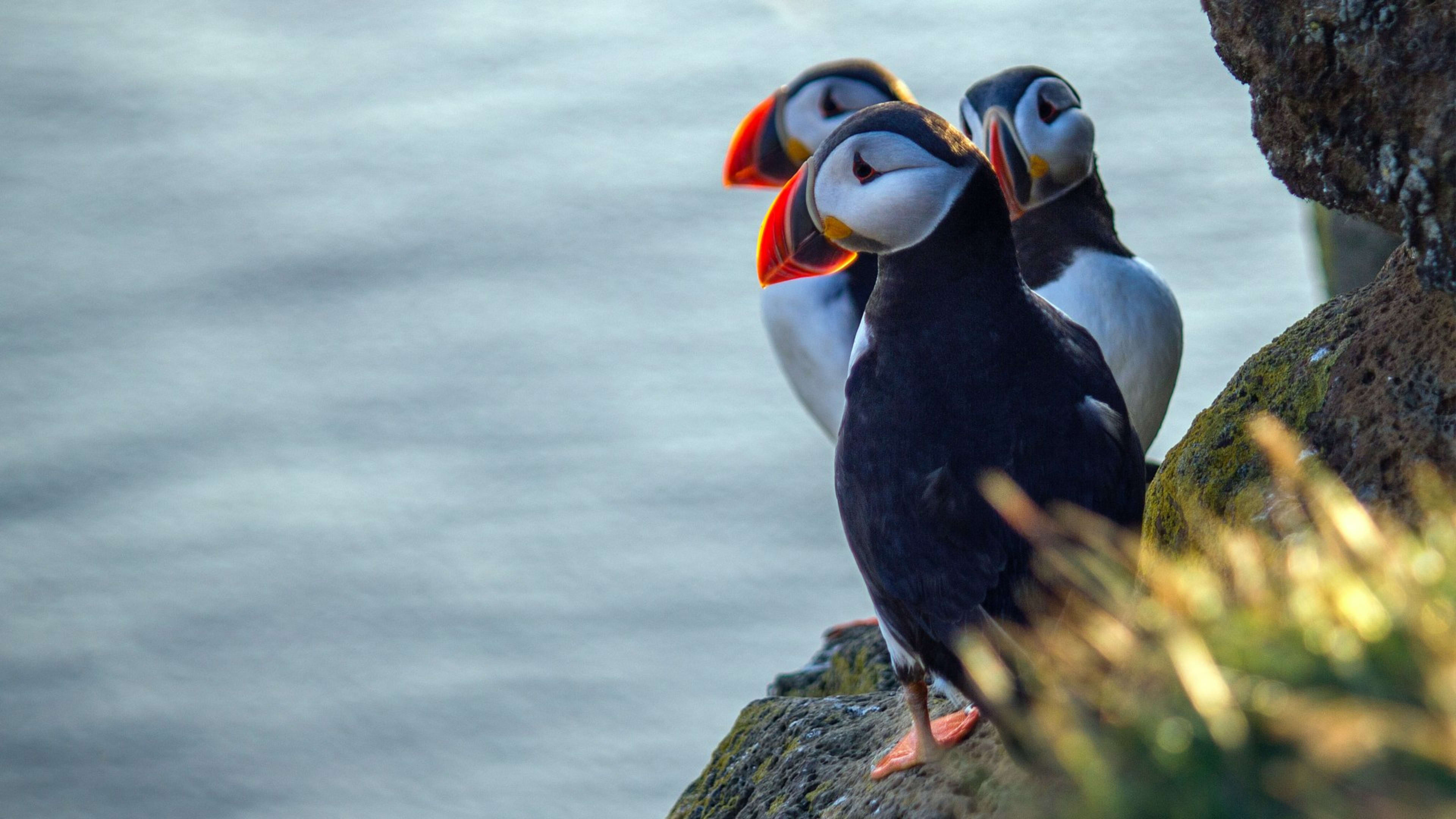
Látrabjarg is Europe's largest bird cliff and one of the most significant seabird nesting sites in the world. From May through August the cliffs are home to millions of birds across around ten species, including Atlantic puffins, razorbills, guillemots, northern gannets, kittiwakes, and fulmars. The razorbill population here represents a significant proportion of the global total.
Atlantic puffins are the most sought-after species for visitors. Around one million puffins nest in burrows along the clifftop each summer, arriving from mid-May and departing by late August. Because the cliffs are protected, the birds have little fear of people and will often remain within a few metres of the path. Visitors should keep a safe distance from the cliff edge, both for their own safety and to avoid disturbing nesting burrows underfoot.
The 1947 rescue
Látrabjarg is also the site of one of Iceland's most celebrated acts of collective heroism. In December 1947, the British trawler Dhoon ran aground in a winter storm at the base of the cliffs. Twelve crew members survived the wreck but were stranded at the foot of the cliff face with no way up. Local farmers, aware that generations of Icelanders had scaled these same cliffs on ropes to collect eggs and feathers, put on their harnesses and descended to rescue all twelve men. The operation lasted several days and involved nearly every farmer in the area.
Getting to Látrabjarg
Látrabjarg is located at the end of Route 612, off the main Westfjords road network. The drive from Reykjavík takes around six hours, covering approximately 425 kilometres. The roads in the Westfjords are narrower and less maintained than elsewhere in Iceland, and some routes are impassable in winter. A 4x4 vehicle is recommended and road conditions should be checked before travelling between October and May.
The nearest town with accommodation and services is Patreksfjörður, around an hour's drive from the cliffs. Rauðasandur, one of Iceland's red sand beaches, is around an hour south of Látrabjarg and is frequently visited on the same trip.
In August 2026, a total solar eclipse will be visible from Látrabjarg, making it one of the prime viewing locations in Iceland for the event.


