Vestrahorn and the Stokksnes Peninsula
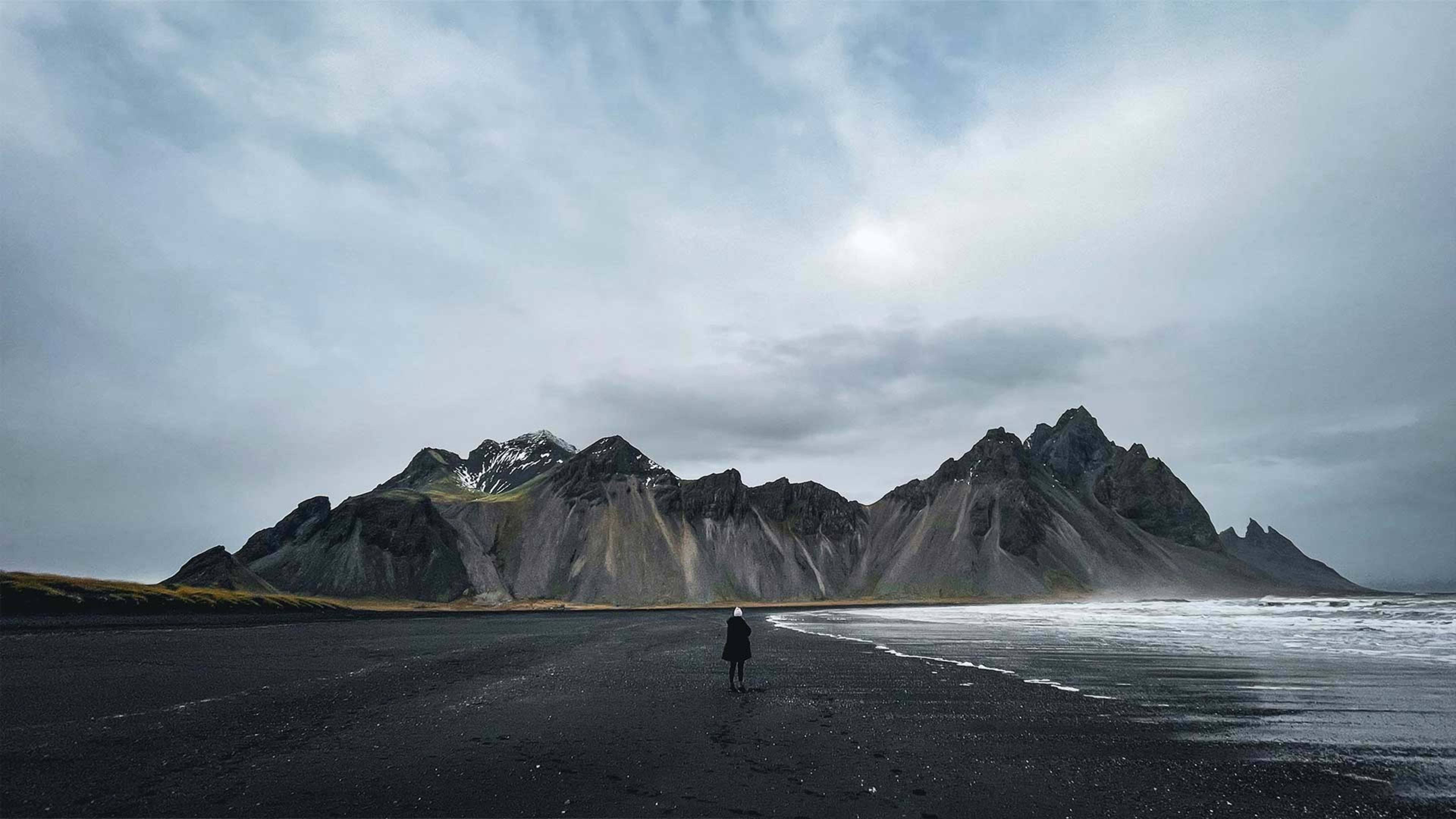
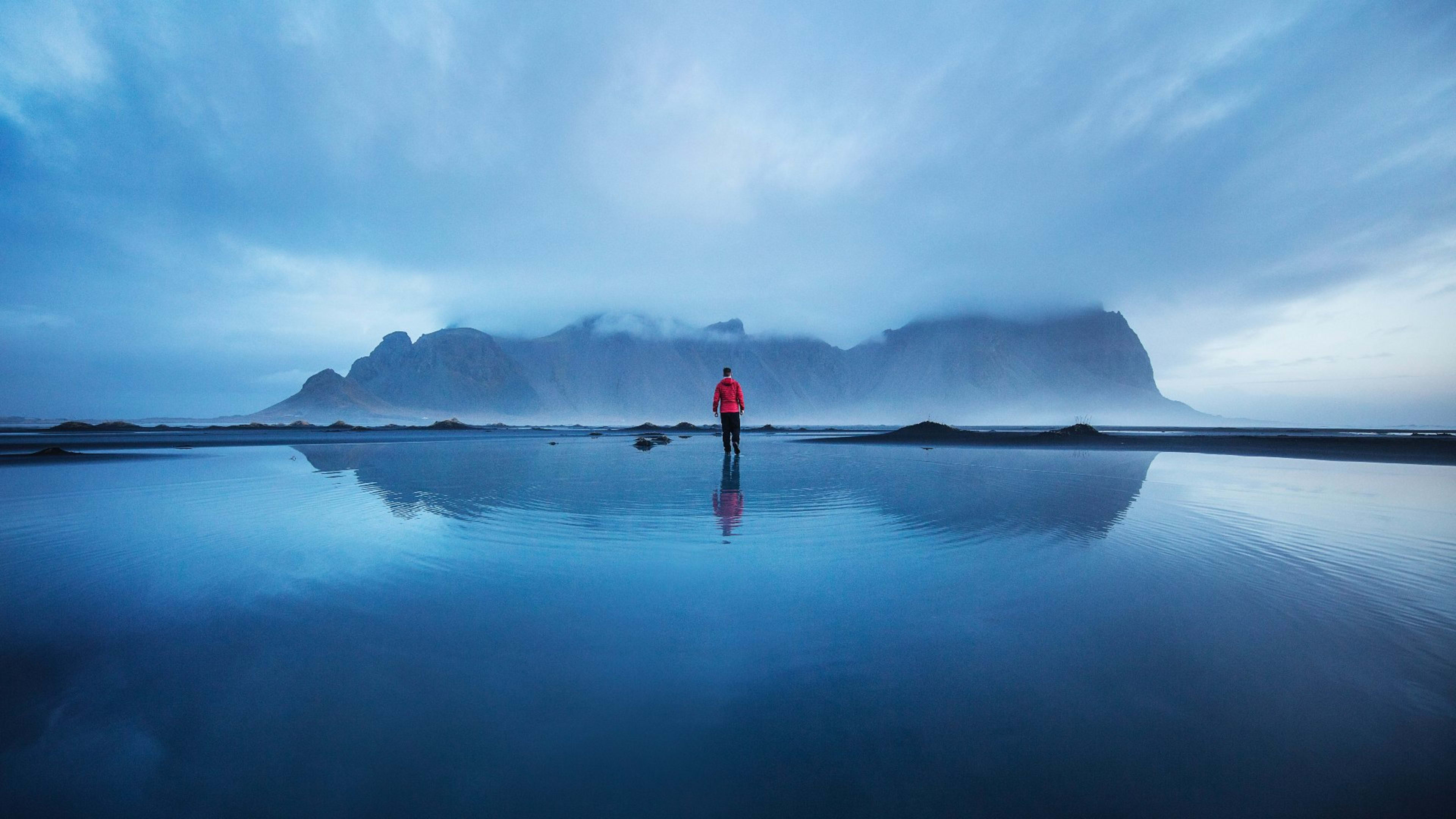
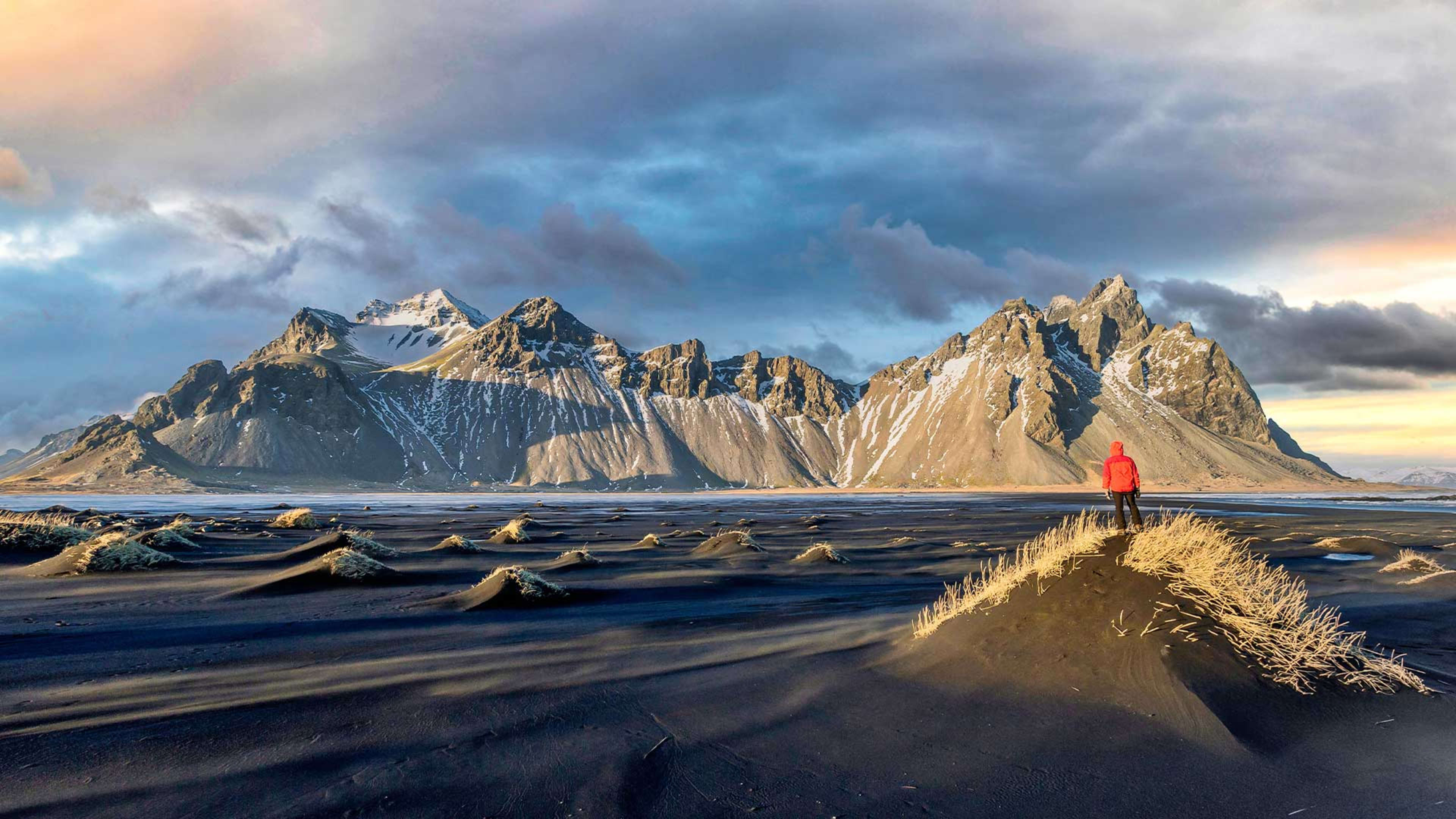
Vestrahorn rises directly from the shoreline at the tip of the Stokksnes peninsula, its gabbro and norite rock forming a cluster of sharp, narrow peaks that drop almost vertically to the beach below. The mountain sits at 454 metres and is part of the Klifatindur range. Its dramatic profile, reflected in the shallow pools that form across the black sand at low tide, is the main draw for photographers and one of the more immediately striking coastal views in the east of Iceland.
The black sand dunes in front of the mountain are the result of glacial sediment carried down from the highlands and deposited along the coast over thousands of years. They shift with the wind and vary in height and shape across seasons. Walking the beach gives a changing perspective of the mountain as the angle and distance alter the apparent relationship between the peaks and the shoreline.
The Viking Village
At the entrance to the Stokksnes peninsula stands a small cluster of turf and timber structures known as the Viking Village. It was built as a film set and has never been used for its original purpose, but it has remained as a visitor feature and adds an unusual foreground element to photographs taken toward Vestrahorn. The structures are modest and weathered, and the site functions more as a curiosity than a heritage attraction. The café at the entrance to the peninsula serves coffee and light snacks and is also where visitors pay the access fee for the area.
Photography at Stokksnes
Stokksnes has a reputation as one of the best photography locations in Iceland, and the conditions that create good images here are relatively consistent. The flat, wet sand near the waterline reflects Vestrahorn when the tide is right, and the dunes provide foreground interest at a range of focal lengths. In summer the extended daylight hours mean golden hour light persists for much of the evening, and in winter the low sun angle produces long shadows across the dunes for most of the day. The Northern Lights are visible from the peninsula on clear nights in autumn and winter, with Vestrahorn providing a distinct and unlit silhouette to the south.
The best light tends to fall on the east-facing slopes of Vestrahorn in the morning. There is no restriction on where visitors can walk within the peninsula, but the dunes are fragile and staying on established paths where they exist helps preserve the landscape.
Getting to Stokksnes
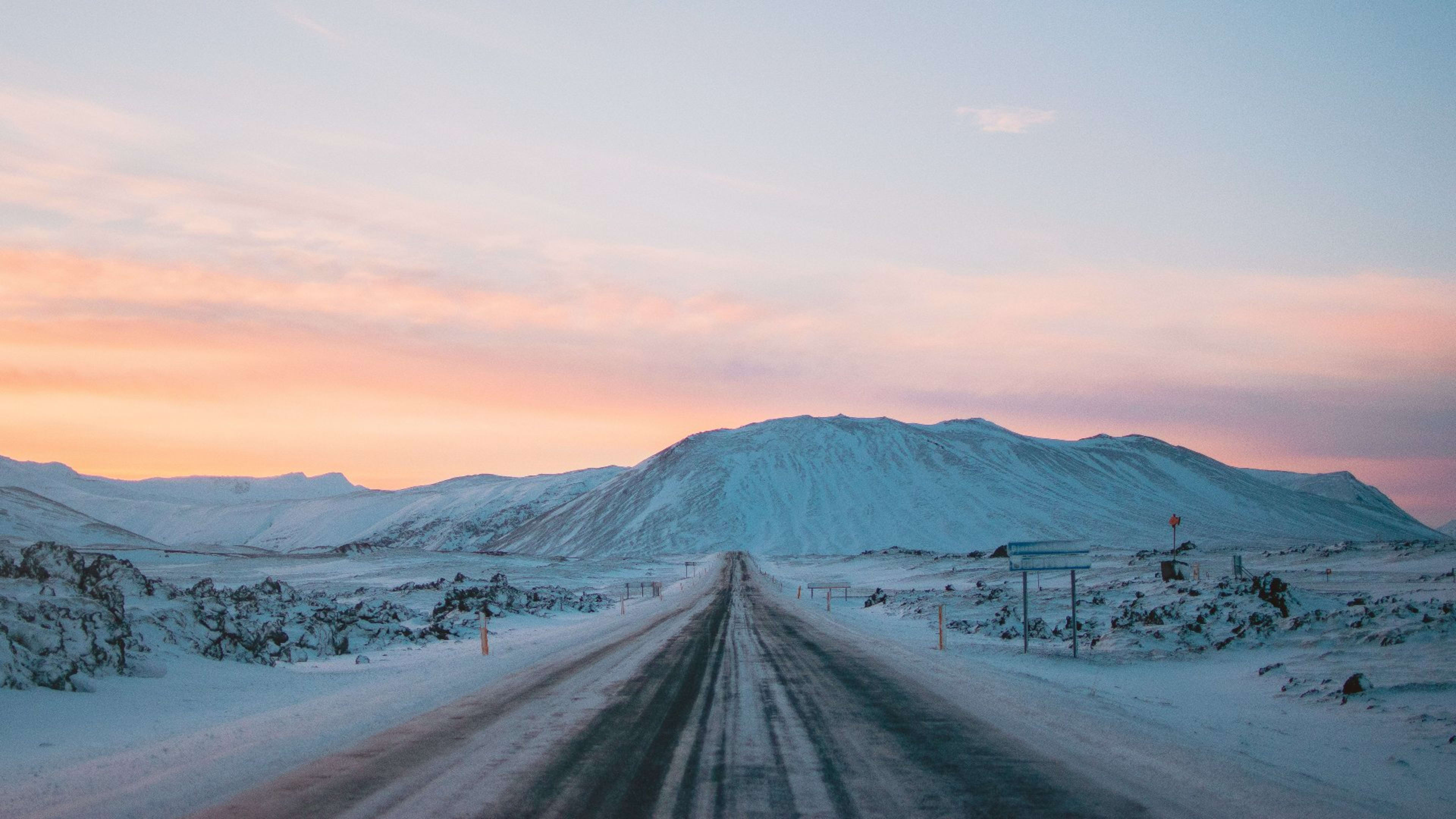
Stokksnes is located off Route 1 approximately 5 kilometres east of Höfn. The turn-off is signposted and the track to the café and peninsula entrance is accessible by standard vehicles in normal conditions. From Reykjavík the drive takes around five to five and a half hours, covering roughly 460 kilometres along the Ring Road. The area is open year-round, though the track can be affected by ice or snow in winter.
There is an entry fee to access the peninsula, collected at the café near the gate. The fee applies to all visitors entering on foot or by vehicle.
Visiting in Summer and Winter
In summer Stokksnes benefits from long daylight hours and relatively mild temperatures, making it practical to spend extended time on the beach and dunes. Höfn, a few kilometres to the west, provides accommodation, restaurants, and fuel. In winter the days are short but the landscape takes on a different quality, with snow occasionally covering the dunes and Vestrahorn gaining snow on its upper slopes. Road conditions on the Ring Road approaching Höfn should be checked before travelling in winter, as the stretch through the east fjords can be affected by ice and, less commonly, closures.