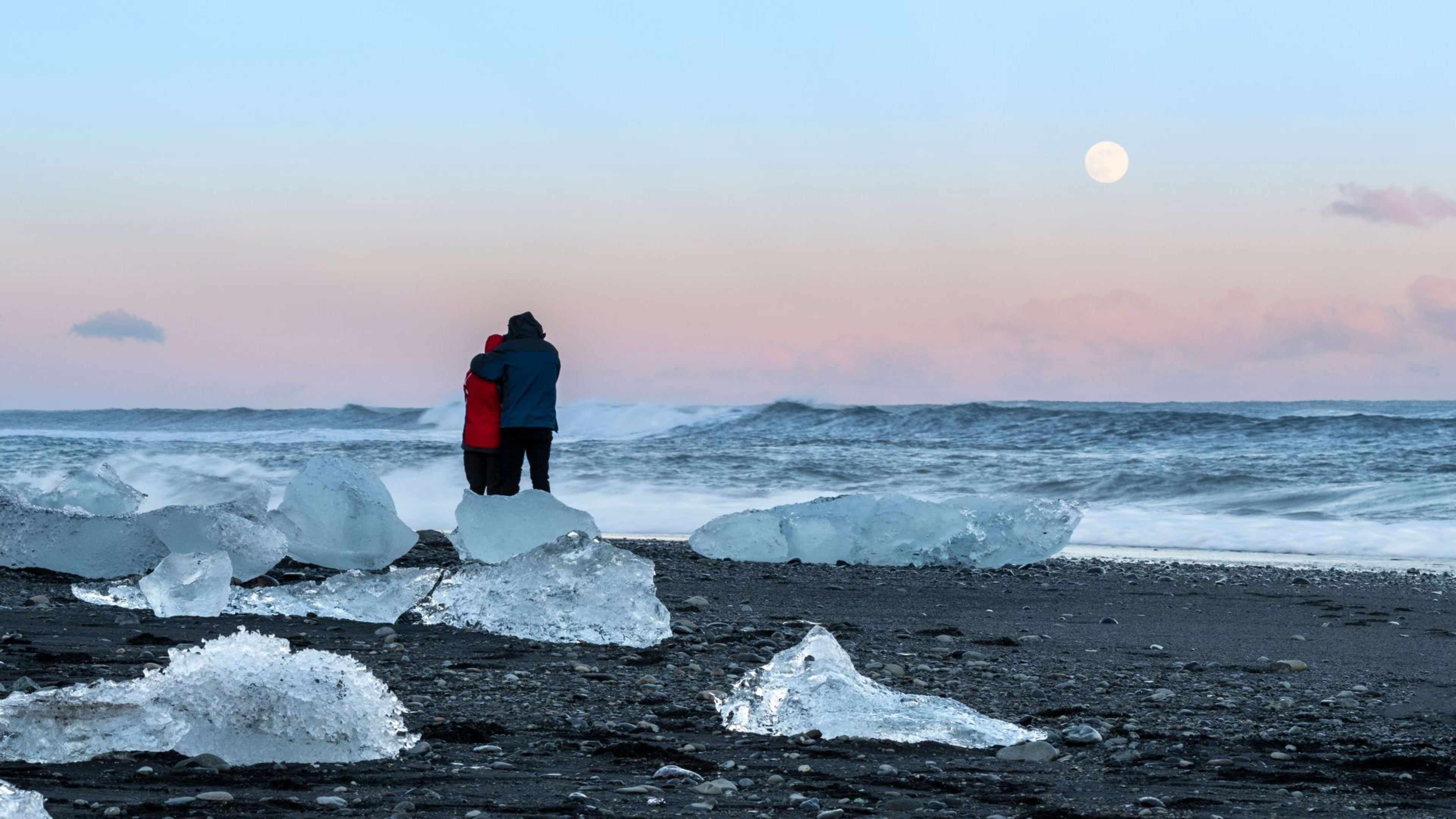
Diamond Beach, known in Icelandic as Fellsfjara, is a stretch of black sand on Iceland's southeast coast beside Jökulsárlón glacier lagoon.
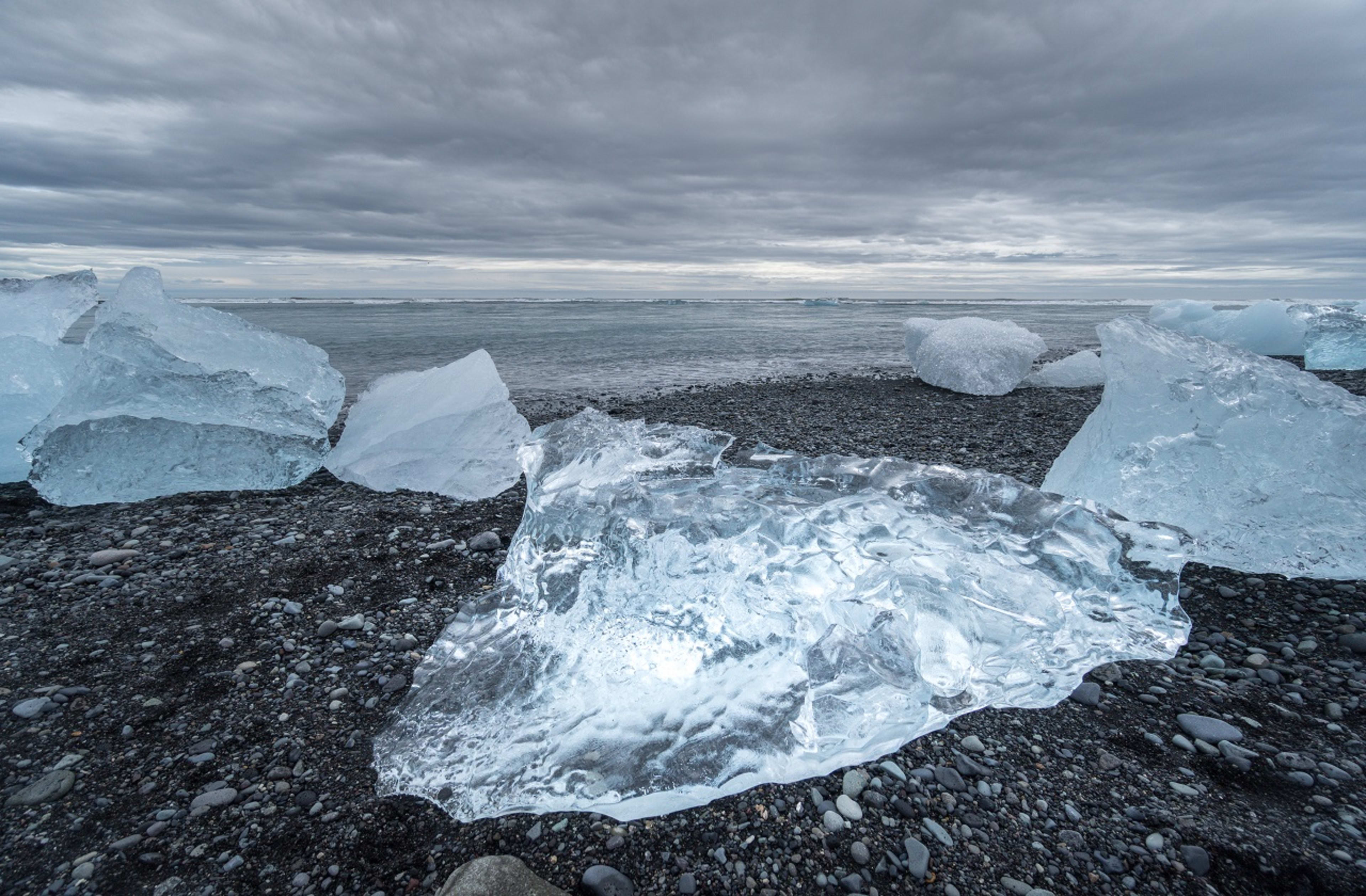
Icebergs that calve from the Breiðamerkurjökull glacier drift through the lagoon and are carried by the current onto the beach, where they sit against the dark sand before melting. The contrast of white and blue ice against black volcanic sand makes it one of the most distinctive stops on the south coast.
- Explore all Iceland vacation packages to find your ideal itinerary.

Why is it called Diamond Beach?
The official name of the beach is Fellsfjara, part of the broader Breiðamerkursandur outwash plain. The Diamond Beach nickname refers to the chunks of glacial ice scattered across the sand, which catch the light in a way that resembles scattered gemstones.
The ice comes in a range of colours depending on its age and composition. Older, more compressed ice absorbs red wavelengths and reflects blue, giving the deepest blue pieces their colour. Some chunks contain dark streaks of volcanic ash from past eruptions. Others appear almost transparent. The variety changes day to day depending on what has recently drifted ashore from the lagoon.

How to visit Diamond Beach
Diamond Beach sits directly beside Route 1, around 390 kilometres (242 miles) from Reykjavík. The drive takes around five to six hours without stops. Most visitors break the journey overnight in the Vík area and continue east the following day.
A self-drive itinerary is the most practical way to reach the beach at your own pace. You can combine it with Jökulsárlón glacier lagoon, which is directly across Route 1, and the wider Vatnajökull National Park area on the same stop.
Guided group tours and multi-day Ring Road packages also include the area as a scheduled stop. If you are following the Ring Road, Diamond Beach falls on the southeastern leg of the route.
Safety at Diamond Beach
Diamond Beach is straightforward to visit but requires the same caution as any Icelandic beach on the south coast. The Atlantic swell here is powerful and waves can reach well up the beach without warning. Visitors should keep a safe distance from the waterline and remain alert to changing conditions.
The icebergs on the beach can be unstable and have sharp edges. Do not climb on them. At the lagoon, do not attempt to stand on floating ice for the same reason.
Watch your footing when walking on the beach, particularly in winter when some ice can be concealed by sand or snow. A torch is useful for winter visits if you are arriving in low light or after dark.

What to see near Diamond Beach
Jökulsárlón glacier lagoon is directly across Route 1 from the beach and is the source of all the ice. The lagoon is worth spending time at separately -- boat tours operate from May through October, taking you between the icebergs with views back to the glacier face. Seals are regularly seen resting on the ice.
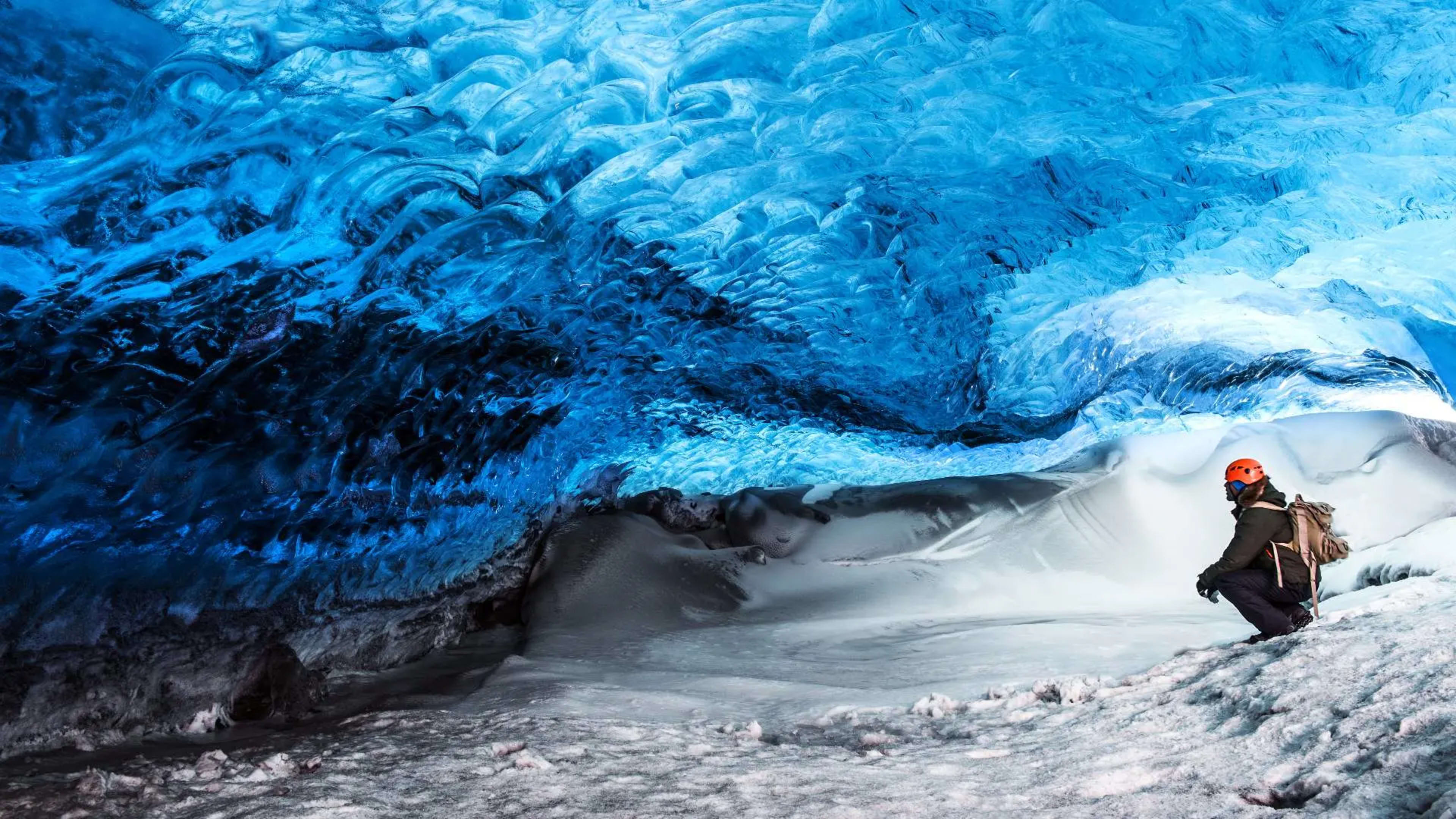
Vatnajökull National Park surrounds the area and offers glacier walks, ice cave tours in winter, and snowmobiling on the ice cap. Skaftafell, around 60 kilometres west, has a well-developed trail network and year-round glacier access.

Visiting Diamond Beach on a tour
Most Iceland Tours packages that follow the Ring Road or cover the southeast coast include a stop at Diamond Beach. Self-drive tours give you the flexibility to spend as long as you like at the beach and the surrounding area. Guided group tours build in time at both the beach and the lagoon as part of the southeast leg of the route.
If you are planning a shorter trip focused on the south coast, Diamond Beach is a natural endpoint for a two or three-day itinerary from Reykjavík. A 5% deposit secures your booking, with flexible start dates on most packages.
FAQs about Diamond Beach, Iceland
Diamond Beach, known in Icelandic as Fellsfjara, is located in southeast Iceland directly beside Jökulsárlón glacier lagoon. From the lagoon, cross the single-lane bridge on Route 1 and take the first right for the parking area, which is a short walk from the beach itself.
The beach is around 390 km (242 miles) from Reykjavík, roughly five to six hours of driving without stops. Most visitors break the journey overnight around Vík or further east, making Diamond Beach a natural end point for a two or three-day South Coast itinerary.
The name comes from the chunks of glacial ice that wash ashore year-round. Icebergs calve from Breiðamerkurjökull glacier, drift through Jökulsárlón lagoon, and are carried by the current onto the black sand beach, where they catch the light in a way that resembles scattered diamonds.
Blue ice forms when air bubbles are compressed out over time, leaving the ice dense enough to absorb red wavelengths and reflect blue ones. Older, more compacted glacial ice tends to show the deepest blue. Some pieces also contain dark streaks of volcanic ash from past eruptions.
The black sand is composed mainly of basalt, a volcanic rock that formed when lava cooled rapidly on contact with the sea and shattered into fine particles over time. Black sand beaches are common along Iceland's south coast for this reason.
Swimming is not safe at Diamond Beach. The waves are powerful and unpredictable, the water is extremely cold year-round, and rogue waves can reach well up the beach without warning. Visitors should stay alert and keep a safe distance from the waterline.
The beach can be visited at any time of year. Winter visits offer the possibility of seeing the Northern Lights reflected in the ice, while summer provides longer daylight hours for photography. Ice volumes vary seasonally depending on calving activity at the glacier.
Yes, and the combination of auroras and ice-strewn black sand makes it one of the more distinctive Northern Lights viewpoints on the South Coast. The best conditions are clear skies between September and March, well away from any light pollution.
There is a dedicated car park directly off Route 1, a short walk from the beach. No fee is currently charged for parking, though this can change seasonally.